Tags
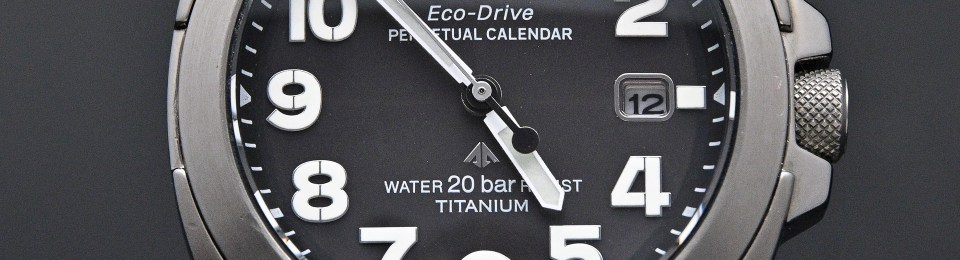
Four years before stepping over the precipice and into a horological rabbit hole, I bought the last watch I would ever own. A watch for life. The occasion was my 40th birthday and the watch was a Citizen Promaster PMT56-2731: eco-drive, perpetual calendar to February 2100 (I figured that would see me out), titanium-case, 200m water resistance.
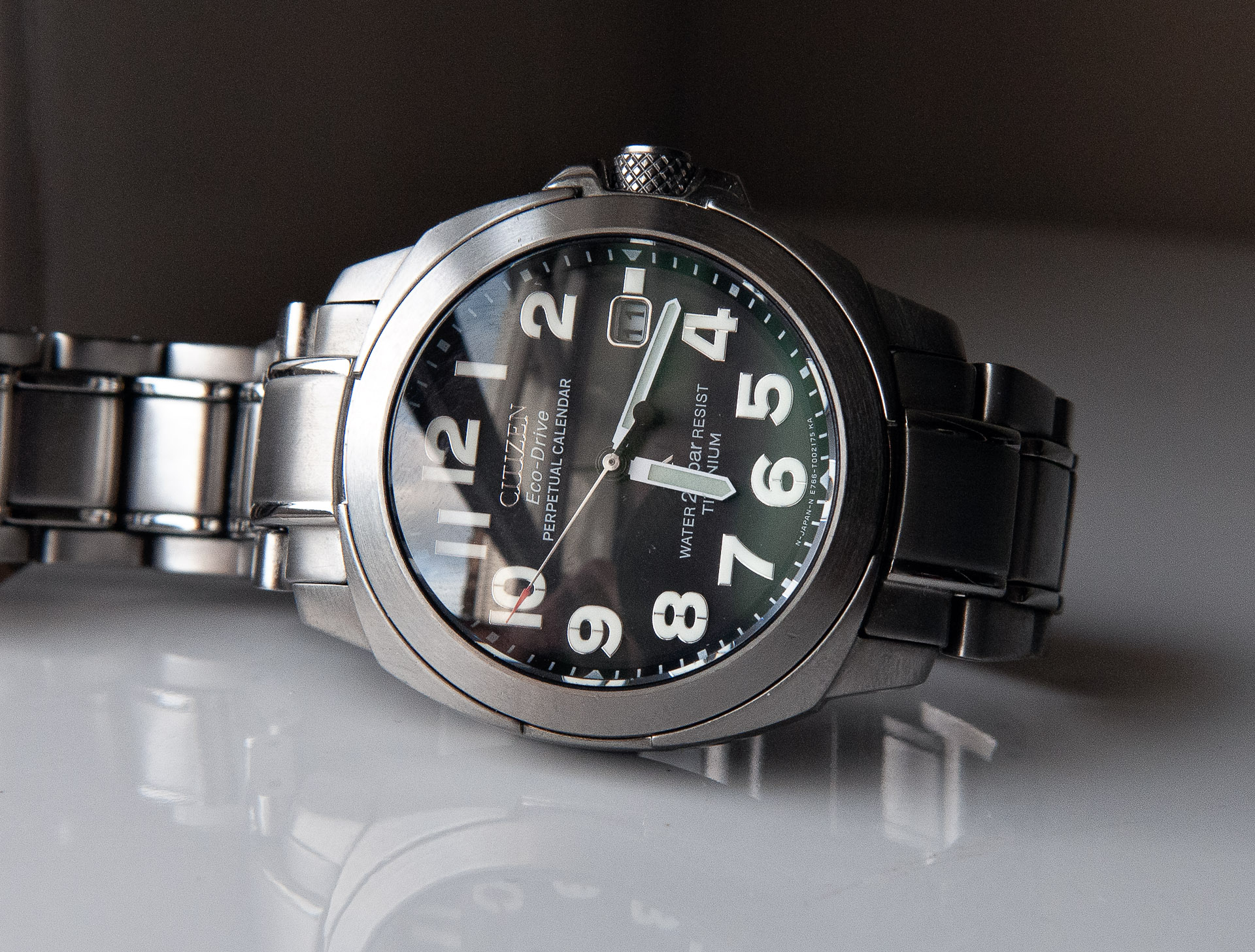
The watch was fairly chunky at 40mm diameter, not including the crown guards, but without too much heft thanks to the light weight, titanium construction. The solar-powered movement promised that it would run and run, never needing a replacement battery. The Duratec finishing promised resistance to dings; the sapphire crystal, resistance to scratches. What more could a fella want? I can’t remember exactly how I found my way to this Japan-Domestic-Market-only model because this was 2004, a full four years before I really started to become properly interested in watches. I bought the watch from Higuchi-inc, one of the pioneering watch dealers in Japan who was prepared to sell directly to customers outside Japan and at a time when the Yen-to-pound exchange rate was in my favour.

Of course, as should be evident, this was not to be the last watch I would ever buy. It was not a watch for life. Why? Because less than four years into my ownership, it stopped working. This failure required two visits to Citizen UK, initially to replace the capacitor, which had failed, and on the second occasion, when the capacitor change had not completely resolved the issue, the entire movement. My frustration at its fragility was compounded by the fact that the klutzes at the Citizen service centre returned my watch with scratches to the bezel and upper case, the result of their attempts to open the case from the crystal side, this being a watch with a unibody, monocoque construction. I was so disillusioned that I sold the watch and set about finding a replacement, the process of which triggered the sequence of events that brings me to where I find myself today.
Some of you may have noticed that on occasions, I indulge myself in horological reminiscences (see for example here and here) and the present post will provide another example. A couple of months ago, I spotted an auction on Yahoo Japan for a 稼働品 シチズン パーペチュアルカレンダー エコドライブ E766-T001203 チタン メンズ 稼働品 中古品. The E766-T001203 reference is the official Citizen model number of the PMT56-2731. The pertinent parts of the Japanese language script refer to ‘working item’ and ‘Citizen Perpetual Calendar Eco Drive’. In a moment of impulse, I threw my hat into the ring and won the auction for probably more than was wise but rushes of blood to the head and all that. As it turned out, upon receipt of the watch, the ‘working item’ part of the description flattered to deceive. The watch was in a state not dissimilar to my old watch prior to its first trip to the wizards at Citizen UK. Reminiscence indeed.

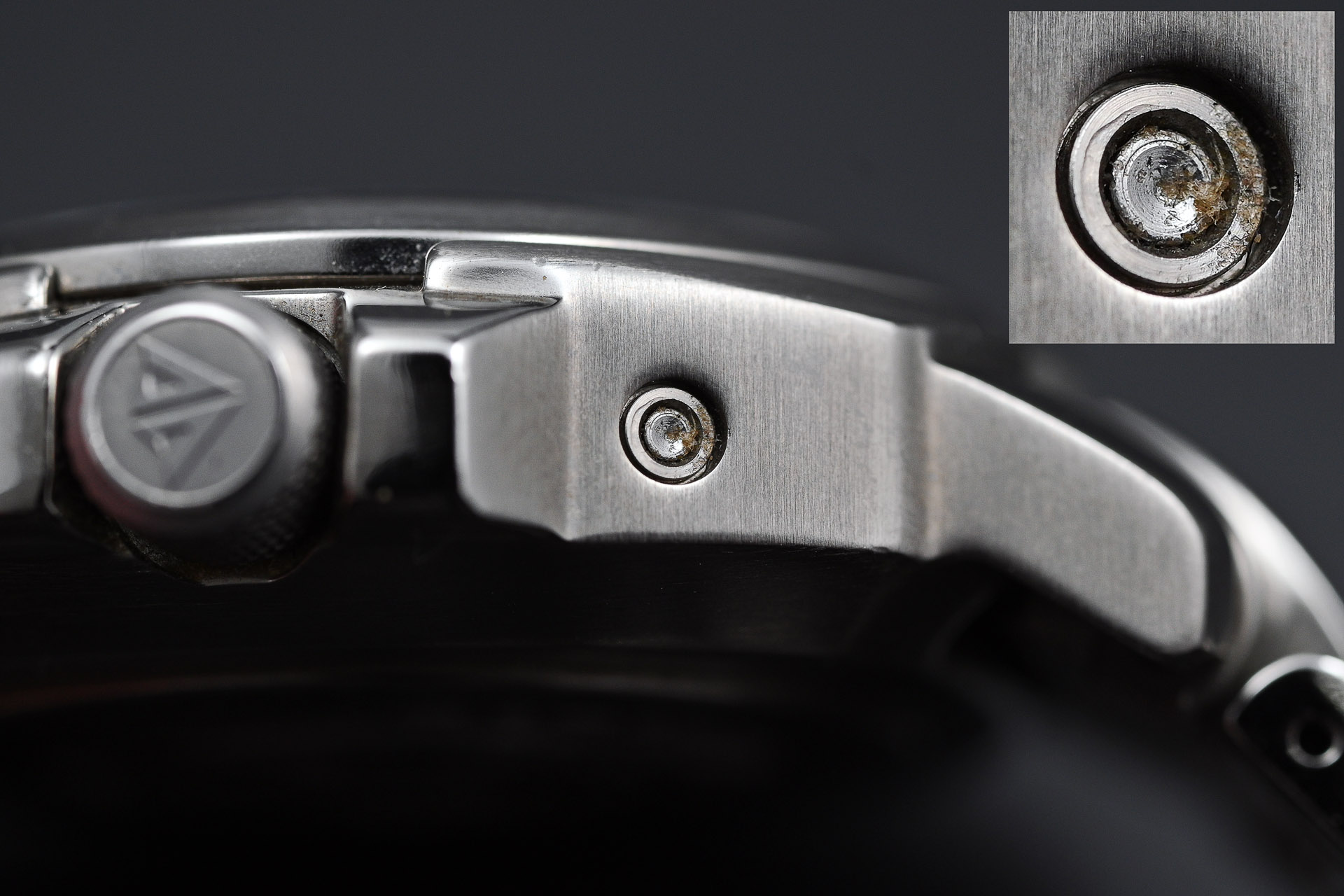
On the upside, the watch presented quite nicely, aside from a minor mark on the bezel adjacent to the 8 marker and some abrasion to the embossing on the case back. The watch case was also pretty dirty, as evidenced by the belly button fluff around the recessed button at the 2 o’clock position.
The most likely causes of the stopped movement were either a completely discharged capacitor, in which case an extended period of exposure to light should resolve the issue (it didn’t) or a failed capacitor. This being a monocoque case, the only way to gain access to the movement is through the crystal side of the case and that requires removal of the bezel.
Conveniently, there are four slots machined into the upper part of the case at 3, 6, 9 and 12 to provide access to a case opening tool.

The bezel lifted easily on one side, exposing the white nylon gasket that provides a seal between the bezel and the case.

A little gentle prising and the whole bezel + crystal assembly lifts away from the case.
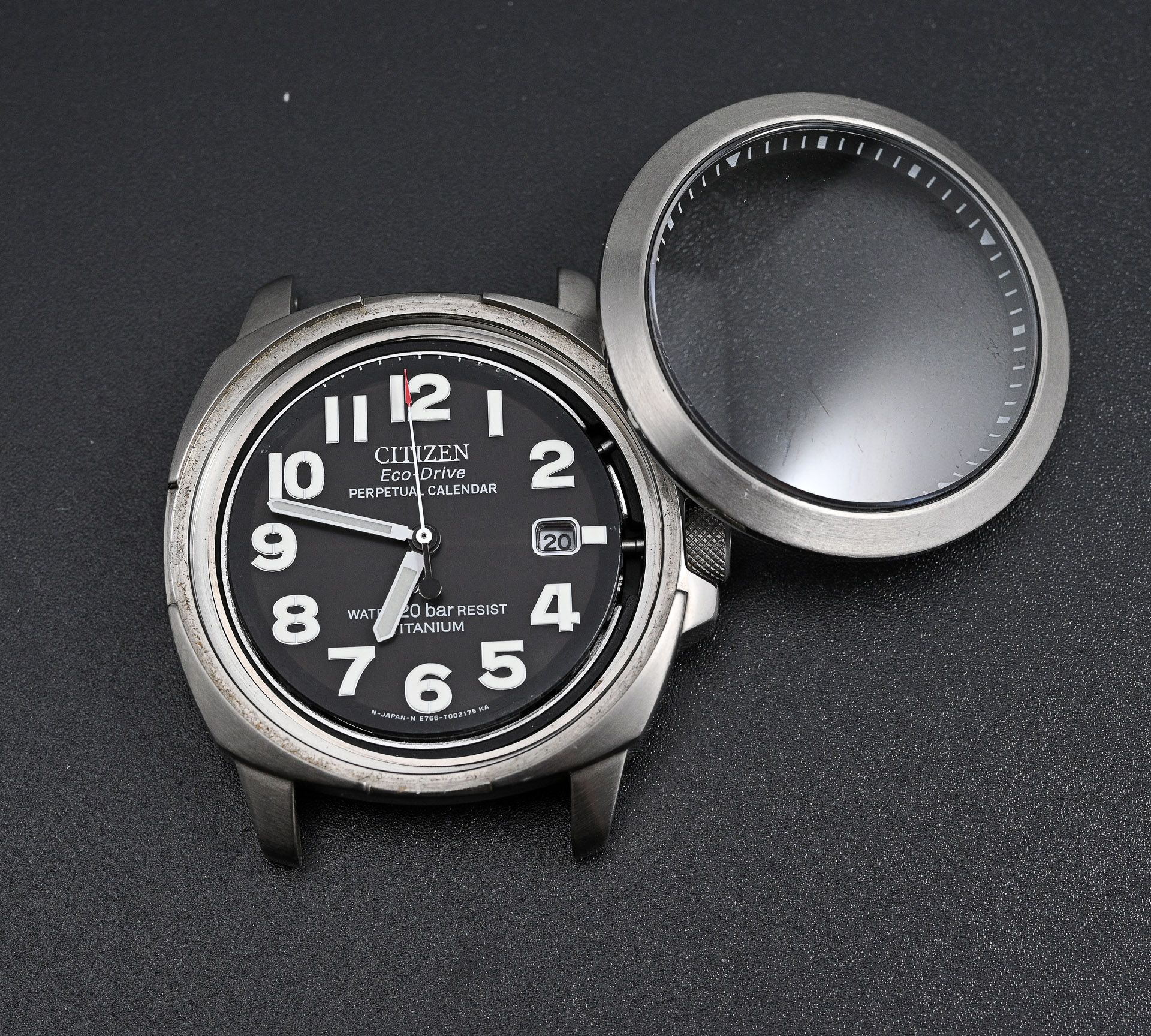
Before the movement can be removed, we have first to remove the crown and stem. This is achieved by depressing the stem release lever located midway between the 3 and 4 markers.

I have a feeling that someone has been here before. Note the smear of lubricant between the 10 and 11 at the edge of the dial and the spot of gunk sitting on the end of the hour hand.

The movement can now be tipped out.

With its nooks and crannies exposed, we can see now just how grubby the case has become. The movement sits in a circular plastic support and needs to be removed from that in order to gain access to the capacitor.
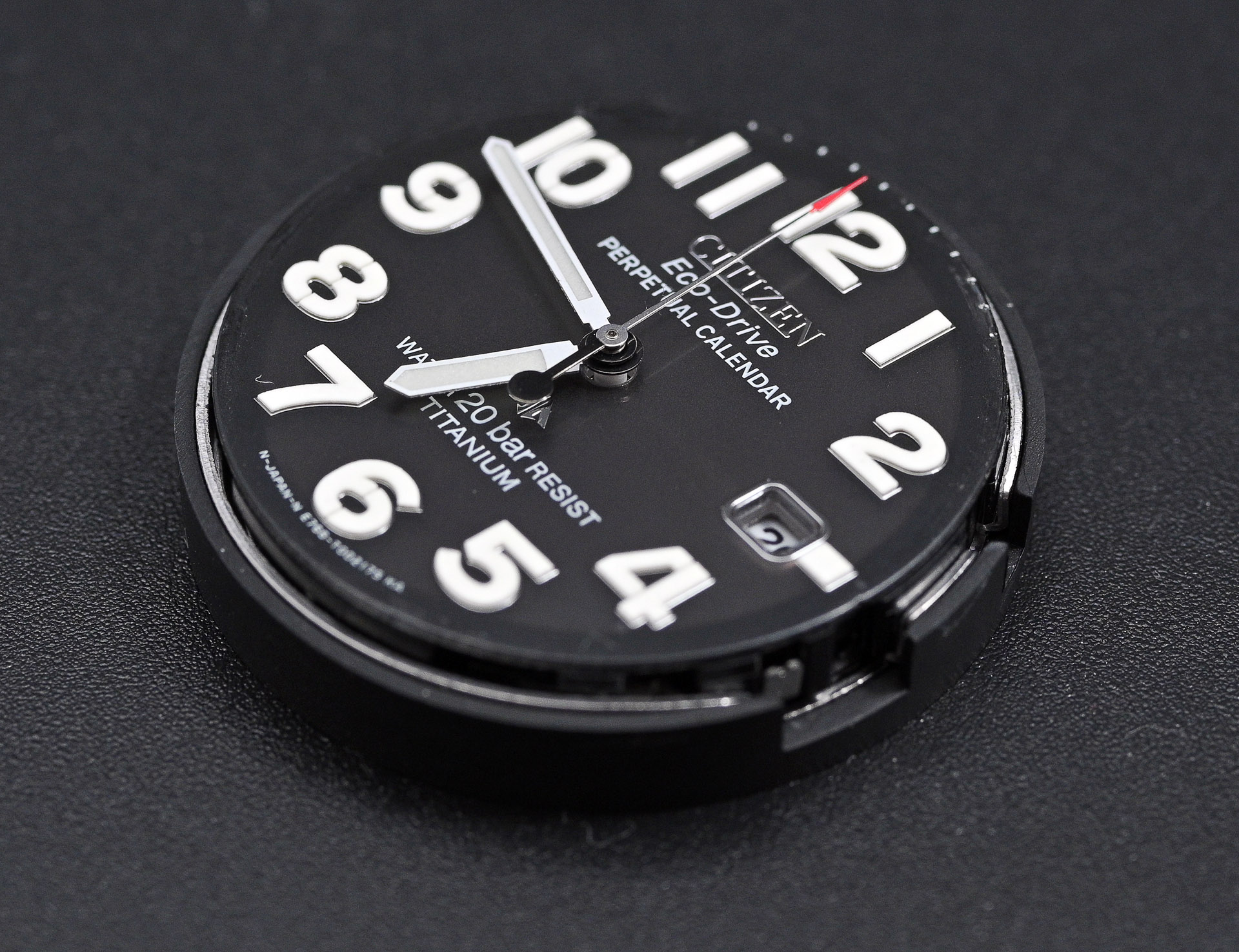
With that done and the movement sitting dial down in a movement holder, we can survey the rear of the movement.

Replacing the capacitor is not really any more challenging, once we’ve got to this stage, than changing an ordinary battery in a regular quartz movement. The only detail that we have to pay particular attention to is to remember to locate the tab on the bottom of the capacitor into the slot in the mainplate when refitting the new part. You can see the tab in the photo above, just below the half-way point on the right hand side of the capacitor. The removal and reinstallation process is illustrated below, clockwise from top left.

With the movement reinstalled into its plastic tray, its revival is evident in the different position of the hands compared to the earlier photos.

The lower part of the case, the bracelet, crown and pusher, have all have a full wash and brush-up but I’ve taken a more measured approach to the bezel to avoid damaging the captured chapter ring.

As part of that process, I have given the pusher tube at the 2 o’clock position a thorough clean.

Interestingly, the pusher sports no fewer than three gaskets.
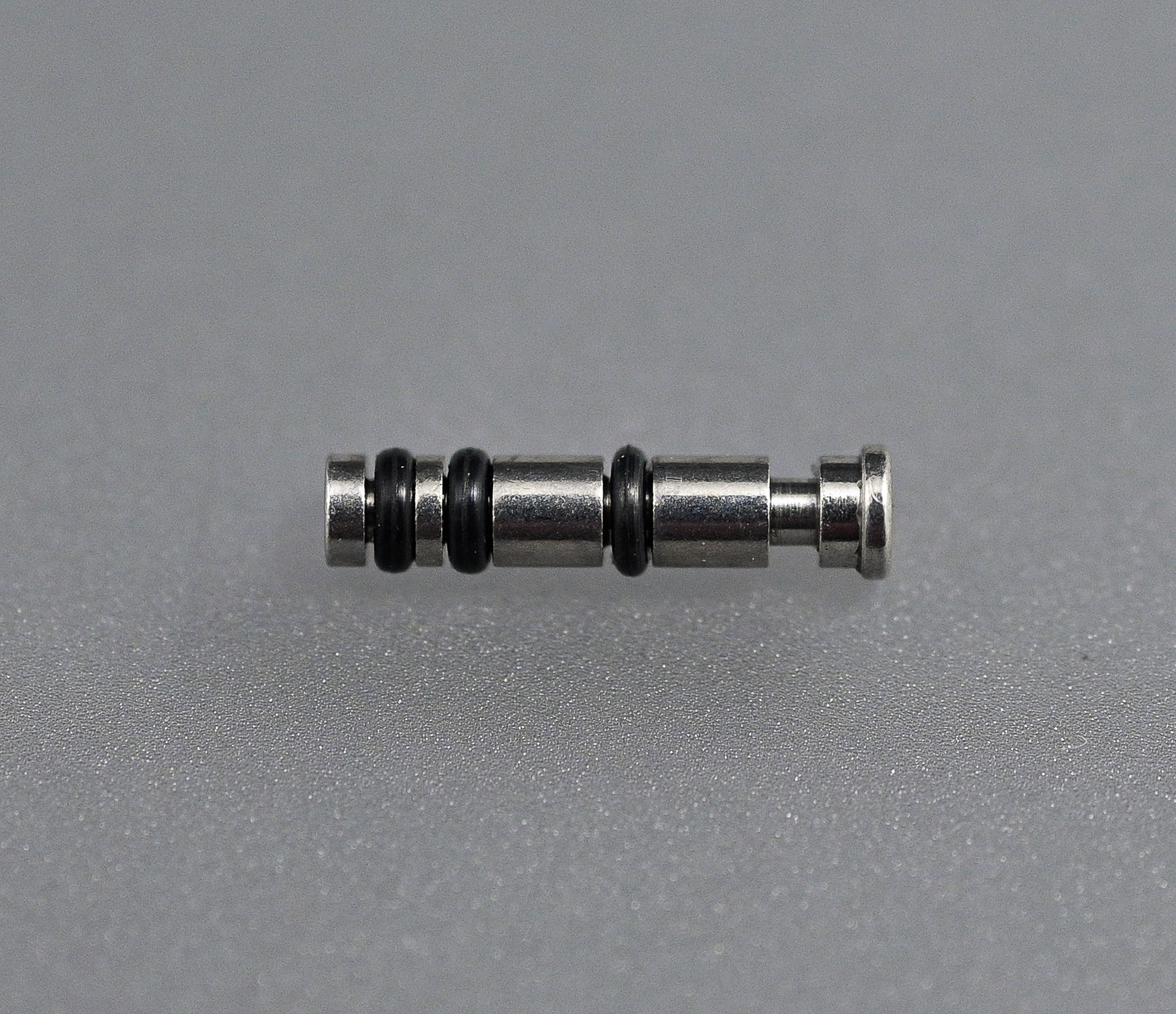
With a dab or two of silicone grease on the gaskets, the pusher finds its way back into position.

The case is now ready to receive the revived movement, and so in it goes, followed by the crown and stem.

Those of you who are familiar with these eco drive movements will surmise that I have executed the all-reset procedure, followed by a hand realignment.
Before refitting the bezel + crystal assembly, I need to figure out what size of nylon gasket to buy.

In the absence of either the correct part number or, if I had it, any means to source an original part, I opted to measure the old gasket and buy a couple of generic nylon gaskets, hedging my bets on the correct size. Following a bit of trial and error, I settled upon a 3.40 x 1.25 x 0.4 mm and fitted it to the bezel prior to pressing the assembly back into the case.

With the cleaned bracelet refitted, I can once more enjoy the last watch I will ever own, a full 18 years after this model first found its way into its daily routine on my wrist.

 Adventures in Amateur Watch Fettling
Nice watch. I bought an original Promaster Tough with the 7828 movement back in 1998 when they first came out in the UK. Like you, I thought it could be the last watch I might ever own. (Oh yeah…?) 😉
Mine went for just over 3 years (just a month or two past warranty expiry) before it had to go back to Citizen UK for attention – it kept stopping overnight – so I’m guessing failed rechargeable cell. It came back with a bit of dirt under the glass, so went back again and came back clean. It’s been running ever since and still gets a regular outing on my wrist.
But as to it being the last watch? You know the answer to that.
Our experiences were almost identical. I subsequently bought my wife a ladies Promaster from the same range and that too failed within a few short years. Still, I still find these watches compelling and with a style that borders on magnificence.
Excellant! I have one too.
I had a Seiko Kinetic once, and inevitably the battery failed after about 6 years of ownership. In the hard light of day, I wonder if a kinetic or solar watch is worth the bother, as you pretty well know that the battery or capacitor will fail at some point, and it becomes more hassle to replace than a regular Quartz watch battery.
It’s cunning technology, solar or kinetic, but I wonder if it doesn’t introduce issues which are worse than the “problem” the technology was meant to address?
In this case, the main issue is having to replace the capacitor in a case requiring entry via the crystal. If it had a screw-down caseback then it would be no more bothersome than changing a regular battery but where hopefully the interval is much longer with the eco drive. But your point is a good one.
Yes, changing the battery or capacitor in a Seiko Zinetic is a bit of a faff. I guess the basic problem is that the manufacturers designed these watches as if a capacitor change would be a rare or never event, and so access isn’t straightforward. Whereas in regular Quartz, the battery is expected to be replaced every few years, and so access is made intentionally easy.
None easier than my lovely old Seiko King Quartz which has a coin operated hatch……
I got my Seiko kinetic going again by boosting the battery or capaciter or whatever it is on a an electric toothbrush charger. My teeth are good too.
Ha! A good tip!
Martin: That is a very handsome watch, indeed, and your nostalgic reminiscence is, as always, a pleasure to read.
Thanks William. I’m glad you enjoyed it.
I love your blog, been a lurker for years! Anyway, I bought the same model couple of years ago on a holiday in Spain. It was a new old stock, probably been in its Citizen glass cabinet for over a decade.
My girlfriend got pretty annoyed by me as I sat and fiddled with the watch during our lunch later that day – but I just couldn’t figure out the button and how it worked. Turns out, the movement was not working properly and I was able to get my money back.
I do like the mono block case!
Great repair as always 🙂 thank you
Hi Anders, these watches are a good example of that oft-heard phrase, “They all do that, sir/madam”. I would add that there is no way to figure out how to use the push button without the manual but once set, you can forget! Until it breaks down that is. I still love this watch though!
Thank you so much for your beautiful, clear, detailed account!
Hello Martin, A good job that you disclose in your great Blog. Many years moving Citizen Eco-drive watches have taught me that they should not be purchased when they have accumulated time in warehouses and stores. The capacitor suffers a lot when the watch spends a long time in storage without receiving light.
A recent watch, from the latest collection, will not present these problems
That all makes sense. I would observe however that the watch I bought in 2004 was brand new and was used as my daily watch until it failed. I have no doubt though that more recent evolutions should be better.
Hey Martin – I have a 7828 Ray Mears. The crystal gaskets are no longer available (part no. 393-B085). Do you think the gasket you used is potentially the same size?
Cheers,Giuseppe
Sorry Giuseppe, I have no way of being able to confirm one way or the other. You will probably just have to do what I did and measure the old gasket and the watch dimensions and then buy one or more likely generic options and go with whichever fits the best.
Hi there fellow watch lover.
I just had to comment, because I just got the exact same watch (albeit not in the same cosmetic condition as yours, and without it’s bracelet strap😒), and I managed to open it up (without any professional tools like the ones you have), but noticed that yours has two parts missing compared to mine! Mine has an aluminium anti-magnetic shield that covers the entire back and sides of the movement, as well as a black rubber surround in the case within which the movement sits. It has cut-outs for the crown shaft and the pusher.
I just thought you might be interested. Let me know if you want me to send you photos.
Kind regards
Peter
Hi Peter,
I’d need to look again at the photos I took during dismantling but the movement in mine sat inside a cylindrical metal cage with a black rubber exterior surround. You can see both in the 11th photo in the sequence in the post. I’ve had two more of these since publishing this post and, although I’ve not opened the last of those, I think the second was the same. But you’ve made me wonder so I will take another look.
All the best
Martin
Hello again Martin
Managed to get it fixed! Not without setbacks though. Anyway, it seems to be up and running now.
HOWEVER….I managed to squish the gasket on reassembly!
I found the part number (393-7607) at Boley.de, but they only deal with trade.
Could you please point me in the right direction to source a gasket? I live in Greece and am not having much luck.
Thank you
Peter
Hi Peter,
Well done for tracking down the part number. Cousins in the UK seem to have stock at £4.35 + VAT and shipping.
All the best
Martin
Oh, and please do send photos if you have them to amateurwatchfettler@gmail.com
I just sent you a photo. But, looking at your photos again more carefully, it seems I may have been mistaken. Looks like all the stuff is there. Sorry…
If I may ask a question: the watchface on mine is loose. It rotates freely about the hand shaft. Do you remember if yours was the same? Just ordered an accumulator for mine, and I’m thinking of how am I going to assemble it and press it closed if the face is doing its own thing
I was pretty confident that everything was present and correct in mine but thanks for the confirmation. I don’t know how the dials are secured on these watches because it will form the outer layer of a sandwich that includes the solar cell but I don’t think it should rotatre freely in situ.
Also, the battery I ordered doesn’t have any tabs on it. It’s like a regular watch battery. I wonder if I may have ordered the wrong one….